In 2026, the question isn’t whether technology user events still matter. They aren’t just surviving, they’re thriving. 74% of Fortune 1000 marketers are increasing their spend on experiential marketing, but the difference is that we’ve learned to design these events differently.
From hands-on demos and impromptu hallway conversations to deeper media engagement and measurable ROI, real-world gatherings are still delivering what no livestream alone can.
Journalists are also still investing their valuable time, recognising that exclusive interviews, behind-the-scenes demos, and real-time access to executives produce stories and insights that virtual briefings can’t always match.
Handshakes to hashtags
There was a fear that the pandemic would kill in-person tech user events, but it just forced them to evolve. It has made them sharper, more intentional and more accountable.
Pre-pandemic events were mainly in-person, centralised and travel-heavy. The industry perception was that if it matters, it happens on a stage.
Content revolved around keynote theatres, packed expo halls, and peer networking. Size did matter and the louder the launch, the more important the event seemed.
Digital components were commonly an afterthought with basic livestreams. Measurement focused heavily on attendance numbers, booth scans and post-event surveys.
Media relations followed the same logic. Journalists travelled for face-to-face briefings and filed stories from press rooms. If you weren’t physically present, you risked missing the moment.
Then the pandemic happened and hybrid and virtual formats became normalised. Since then, audiences have expected flexibility. Virtual formats have meant that reach has expanded dramatically. At the same time, in-person user events have become more curated, more premium, often niche and more experience-driven.
Media behaviour has evolved too. Journalists can access announcements remotely through livestreams and virtual briefings. Attendance is more selective, driven by access, exclusivity and crucially, genuine news value.
Why show up?
So, why the trend back to face-to-face? The migration to virtual events taught us that in-person events still deliver things virtual cannot fully replicate.
Those unplanned conversations for example that spark partnerships, job offers and product ideas. We know that face-to-face interaction accelerates relationship depth and decision-making. Hands-on demos bring products to life in a way that you can’t replicate online.
There’s also something about the time and money investment into attending a physical event that shows a level of commitment. Media know that by turning up they’ll get deeper interviews and richer storytelling for readers. It’s not uncommon for an informal briefing to turn into more of an exclusive.
Finding the sweet spot
But there must be more, right? Neither face-to-face nor virtual is a one size fits all. Both formats learn from each other to exist in harmony and give maximum flexibility.
Online events are cheaper, no travel and offer global reach potentially. They live longer online so can support sales and marketing long after they’ve finished, so they can create multiple touchpoints over time. Every interaction online is trackable and around 68% of event marketers use data analytics to assess success.
But it is when you combine this with the power of face-to-face engagement in a hybrid event and you achieve real value.
Clicks, Conversations, Conversions
The evolution of user events has also been driven by the ability to deliver and demonstrate ROI, particularly as budgets tighten and expectations rise. With many more communication channels at our disposal, many of them digital, we are increasingly comparing event ROI against other channels, or in combination with other channels.
For example, while an in-person event may appear expensive upfront, its cost per qualified opportunity could prove lower than a paid digital campaign.
Engagement metrics are now far more nuanced and multi-dimensional. We are now more likely to focus on session attendance vs registration. Participation in pools, downloading and eyeballs on content and eyeballs on event content are measurable in a way that can translate to value as it feeds into the marketing funnel. In this way, engagement becomes a predictive signal, not just a vanity metric.
Data capture is richer because digital touchpoints are built in from the start. Registration journeys, networking behaviour, and follow-up engagement are all measurable.
Brands can better track any increase in advocacy or referral activity and can benchmark through tracking share of voice during the event duration and beyond. In a survey by Live Group, 98% of attendees shared their experiences online, creating digital or social content at events.
In harmony
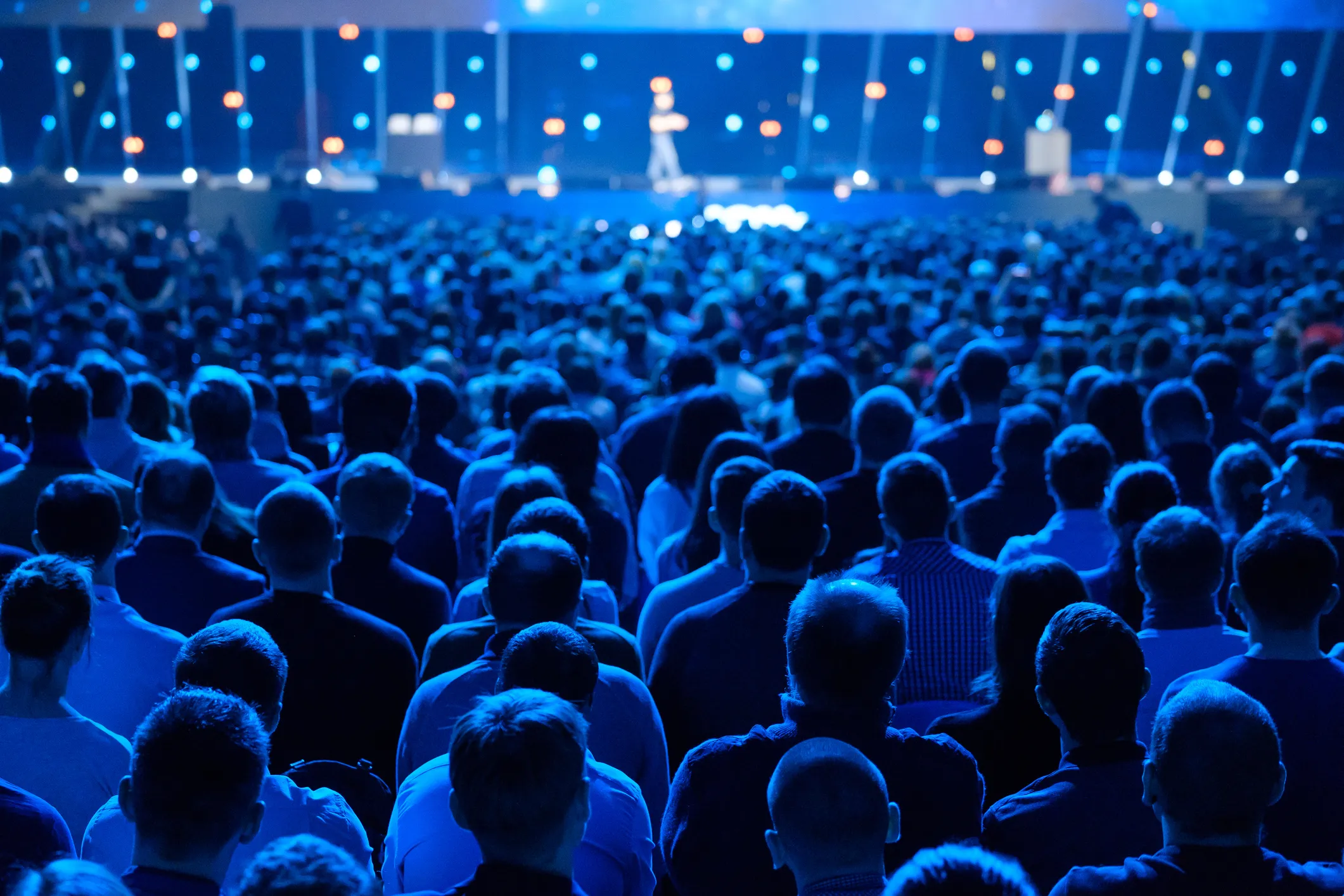
In-person tech user events work best where physical presence, digital amplification and year-round engagement work in harmony.
Most importantly, ROI is no longer anecdotal. In-person events concentrate trust, immersion, and community energy. Virtual formats scale reach and data. Hybrid models connect both.